


 Negin
Negin

Table of Contents
The internet serves a dual purpose as a platform for sharing ideas and as a battleground on which terms such as “Karen” have been weaponized. For most, being called a Karen—a stereotype used to categorize obstinacy or entitlement—carries a sting, especially if it seems undeserved. So, how can you respond graciously, with humor and self-awareness, when someone calls you a Karen?”
what to say when someone calls you a karen?
Keep calm and think. Rather than on the defensive, an alternative is to ask for clarification: “I didn’t mean to come across that way; please explain what you mean.” This way, you undermine tension by remaining calm, being respectful, exuding empathy, and letting yourself take that unfortunate moment as an opportunity for constructive exchange.
Understanding The Karen Label
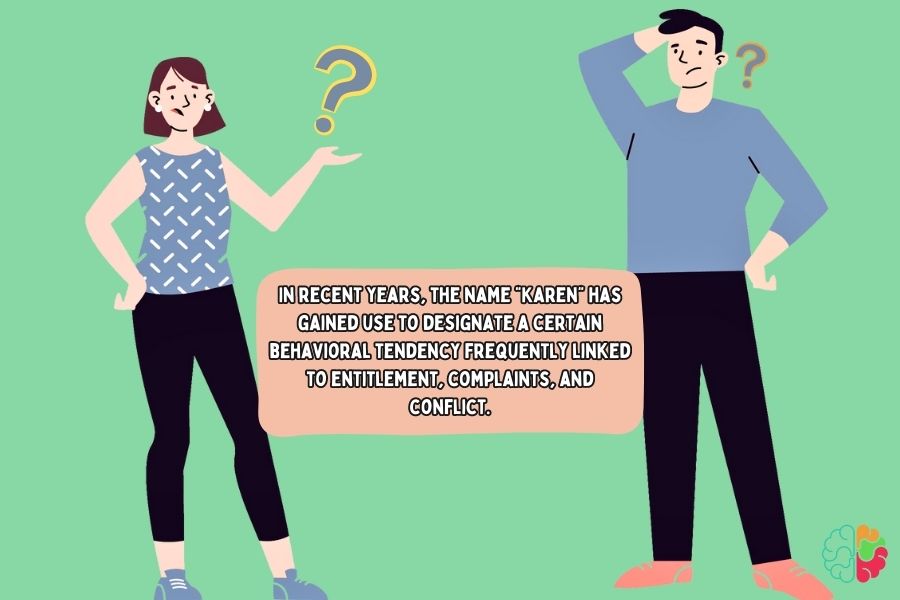
Before one jumps on the responses, it is good to first understand what being labeled Karen really means. The term itself has morphed from internet slang into a cultural symbol—a slap that is used to expose problematic or chaotic behavior. While meant to be humorous and critical, it can equally devolve into something reductive and nasty. This larger context would inform what way to take the situation—on the face of it, good-natured ribbing or insult, malice notwithstanding.https://youtu.be/SSXoBtmtypg
The label tends to unfairly stereotype people—young fathers and particularly women—due to isolated behaviors that could otherwise be chalked off as inconsequential. But like all stereotypes, it fails to take into account context, personality, and intent. Figuring out its origin and the reason it could be used puts you in a context to be neutral rather than defensive.
First Things First: Evaluate It
When you find yourself on the receiving end of that “Karen” label, it is highly advisable to stop into assessing the following:
How Serious or How Much of a Joke Was That?
Was it said out of fun or was it supposed to provoke? Context is everything. Fun-loving banter with a friend is a thousand miles distant from a serious and accusing name-calling, like from a stranger in the middle of an argument.
Give It a Thought: Is It True?
Self-reflection can feel quite uncomfortable. Are you somehow behaving in ways others perceive as entitled? Ask yourself if the tone of voice, words, or actions were possibly misconstrued.
Who Said It?
The source must be paid attention to. Perhaps it is harmless teasing from a close friend, or on the other hand, a cold, unfair assessment from a stranger or mere acquaintance. Knowing their attitude can direct you toward your response.
Am I in the Right Frame of Mind?
Am I calm and more levelheaded? Or is it already a point of frustration? Emotional reactions can only blow something out of proportion. Take a deep breath and strive to make sense of this.
Right now, you are in a better position to determine an appropriate response after appraising the context.
You might also enjoy: 35 Best Flirty Responses to “How Did You Sleep?” [2024]
What To Say When Someone Calls You A Karen?
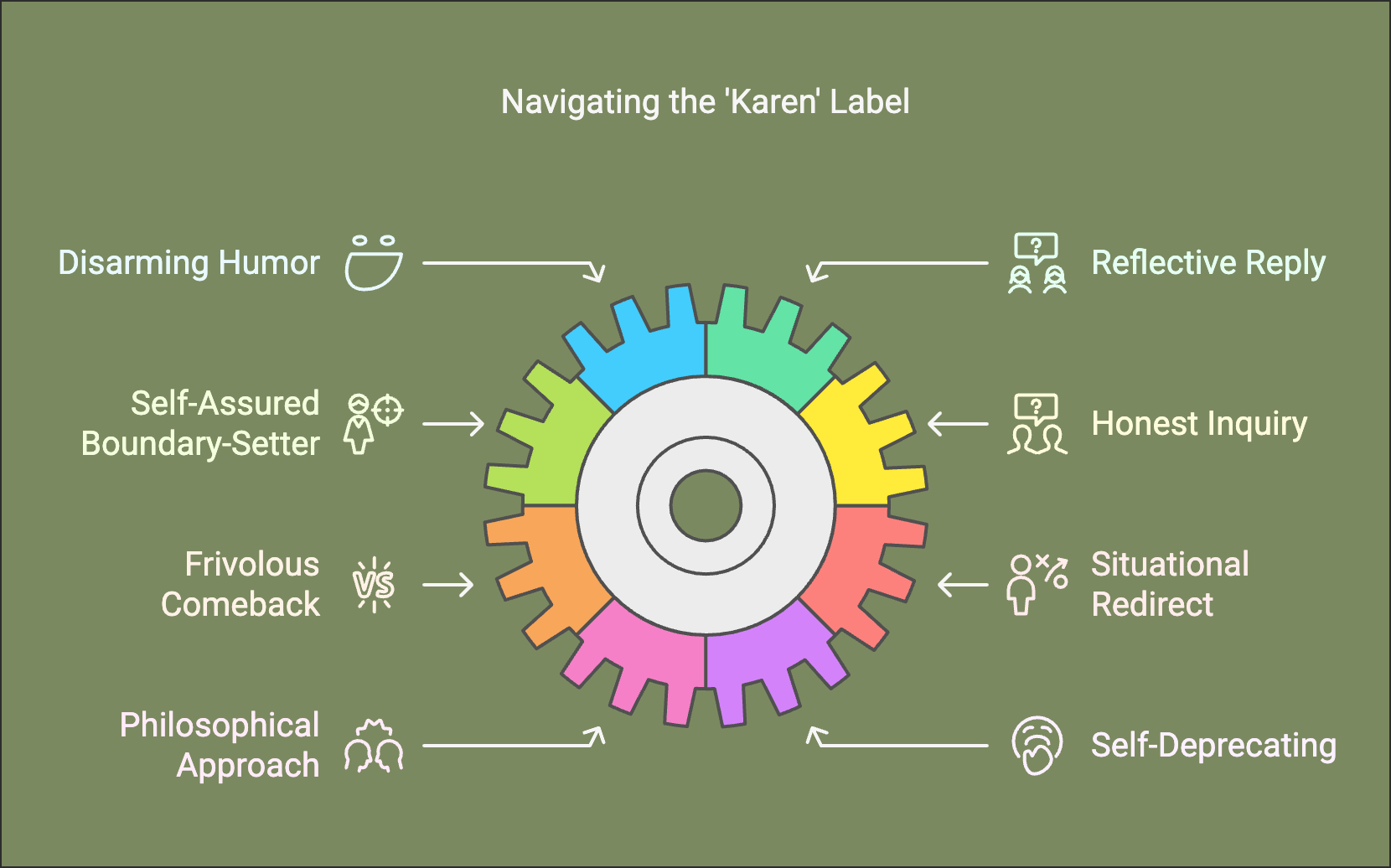
1. The Disarming Humor Scheme
“Oh no, did I just ask for the manager now?”
Humor diffuses tension; humor indicates you’re not taking the label too seriously. It also gives you points on self-awareness, which may soften the encounter. A little lighthearted remark can break the ice and prevent the situation from escalating.
2. The Reflective Reply
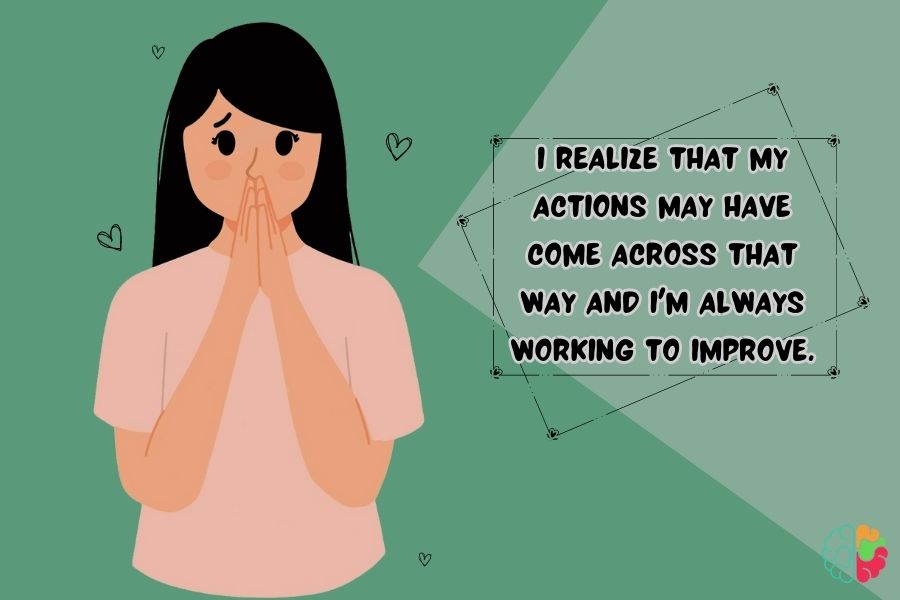
“I’m sorry if I came off that way. That wasn’t what I intended.”
If there’s even a hint of truth to the charge, owning it shows maturity. Acknowledgment of misunderstandings usually takes the sting out of the accusation. Putting forth reflective responses gives evidence of emotional intelligence and empathy.
3. The Self-Assured Boundary-Setter
“That’s not who I am, and I don’t appreciate being called that.”
If the term feels disrespectful or unwarranted, shutting it down confidently but calmly sets a boundary. Setting boundaries ensures that you do not have to tolerate unfair treatment or verbal jabs.
You might also enjoy: Why Do I Suck At Everything? 20 Helpful Tips To Erase It!
4. The Honest Inquiry
“Could you explain to me what gave you that impression?”
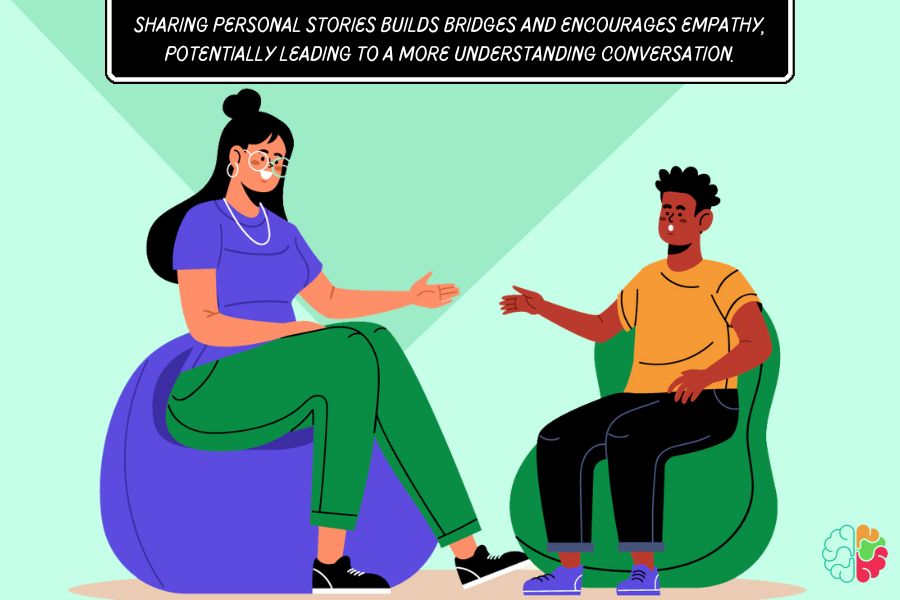
On some occasions, if you ask for a clarification, it encourages the other party to rethink their words. Besides, it opens the door for constructive dialogue. Such an open reply can underline the assumptions or misconceptions made by the other person.

5. The Frivolous Comeback
“Well, Karen or not, I want what’s right!”
A frivolous comeback indicates that you’re not bothered by the tag and keeps things light. Humor can do a lot to bridge gaps between opposing viewpoints or positions, especially in matters that would be less serious.
6. The Situational Redirect
“Can we interject and focus on the issue instead of names or labels?”
Changes the focus back to what’s gone wrong, an image of a so-called disagreement or misunderstanding. While redirecting a conversation shows leadership, it also suggests emotional control.
You might also enjoy: Why Am I Bad at Everything? 17 Psychological Reasons You Are Wrong!
7. The Philosophical Approach
“Labels like this aren’t doing any justice to anyone. Do you want to sit down and talk about it constructively?”
This goes well in more serious or professional settings, thereby fostering a mature conversation. On the brighter note by philosophically addressing an issue, you help participants look beyond stereotypes.
8. Self-Deprecating
“Uh-oh! Have I crossed into Karen territory? Somebody stop me!”
When within a group of friends, giving yourself such a jumpy nudge helps reduce tension while showing you can also laugh at yourself, re-establishing the kinship without making things worse.
9. The Assertive Clarifying Statement
“I’m not trying to be difficult; I just believe what I think about is important.”
A good way to address the situation without seeming deadlocked from your point of view; for sure, it acknowledges the importance of your concerns while respecting the other person’s opinions.
10. The Thoughtful Deflection
“What does being a Karen mean to you?”
This is invoking conversation and inviting reflection from the other person. It encourages mutuality and respect from both sides. It further illustrates the fact that labeling such a thing is very subjective.

11. The Sarcastic Twist
“If wanting decent customer service makes me a Karen, I guess I’ll own it.”
When delivered with the proper tone, sarcasm can neutralize an accusation without further aggravating a conflict. However, use it sparingly to avoid misunderstandings.
12. The Graceful Exit
“I’m not one for arguing over labels, so let’s just move on.”
Stepping away from a pointless conversation tends to be the most superior approach to take. Walking away from negativity shows strength and maturity.
You might also enjoy: 30 Best Flirty Response To How Was Your Day?
When the Label Feels Unfair
Being called a Karen can sting—especially if it seems unwarranted. If this is the case, use these additional strategies:
- Stay Calm: Avoid reacting in a way that may merely serve to bolster negative perceptions.
- Seek Understanding: Ask for clarification and explain your motives. Such misunderstandings often underlie accusations.
- Reflect: Use this moment for self-reflection. Even if the accusation feels unfair, see that there is always room for personal growth. Could your tone/approach/tact have been better?
- Set Boundaries: If the label is wielded in malice, feel very free to confront it with some aggression, clearly articulating how the term hurts you.
- Ask for Help: If the accusation is made publicly, call upon those in the room who can sufficiently understand your situation so that they may offer support.
Turning the Karen Moment Into Growth
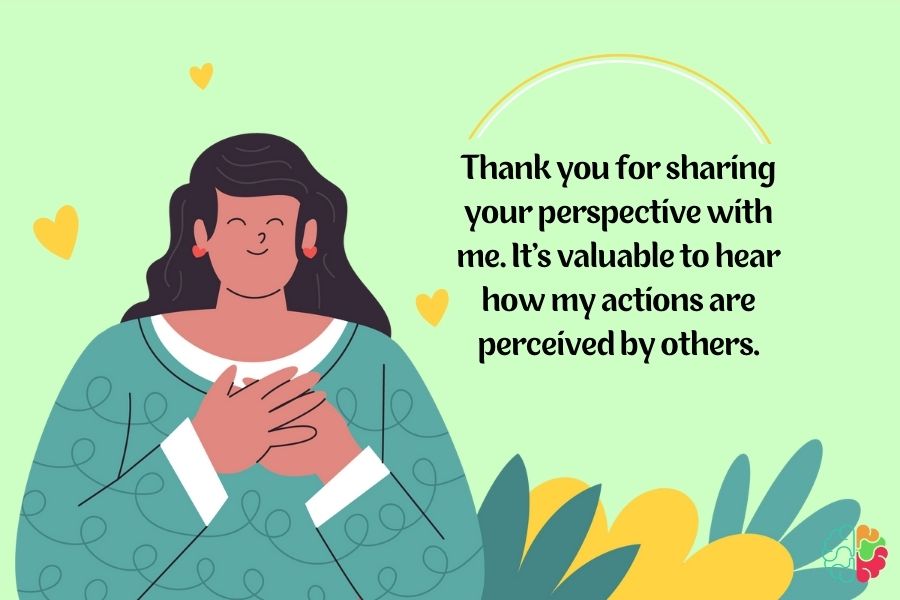
Nobody enjoys being called a Karen or having it hurled at them, but every experience can be an opportunity for growth. Use this time as a moment of reflection, to learn from it, and to carry an intention to interact with others in the best possible way with respect. Whether the accusation was true or not, how you choose to respond to it gives a lot of insight into your character.
You might also enjoy: 20 Best Savage and Funny Roasts For Kids [2024]
Suggestions for Growth:
- Seek Feedback: Ask trusted friends what they really feel about the accusation; were you actually uncourteous?
- Develop Emotional Intelligence: This will help recognize, name, and monitor feelings. This will ensure that you have the grace to understand emotional experiences in society such as instant recognition and control of emotional precepts. Emotional intelligence is a lifelong skill.
- Focus on Positivity: Aim to respond to life’s challenges with kindness, patience, and understanding. Positive gestures stick in the mind longer than the actions themselves.
- Embrace Growth: No matter how much it hurts, view it as an opportunity to become an even better you.
You might also enjoy: 30+ Sarcastic And Savage Comebacks When Someone Insults You!!
I suggest you listen to this podcast:
Concluding Thoughts
Being called a Karen may feel unwarranted, especially when it comes out of the blue. However, how you respond can escalate this situation or turn it into just an opportunity for growth and interconnectivity. Whether you choose to go with humor, assertiveness, or self-reflection, coolness, self-awareness, and respect are key.
Print, paint, and prayers, the next time someone throws the Karen label your way, get set with grace, wit, and even a little bit of humor. Sometimes, that is just what it takes to turn a tense situation into one of those glorious ones.